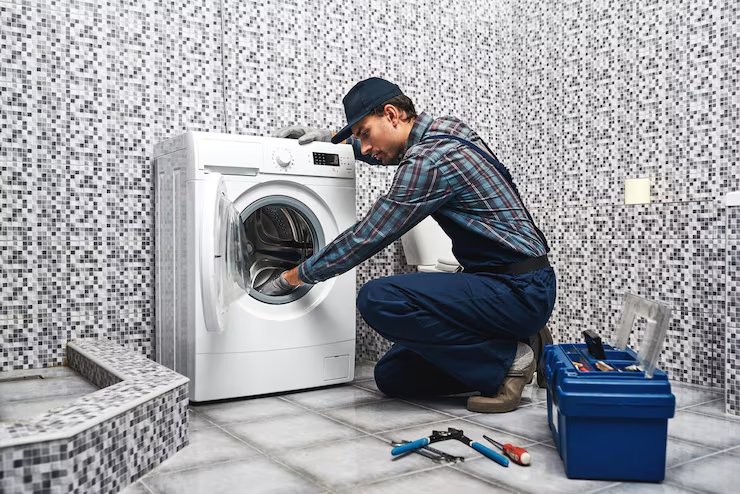




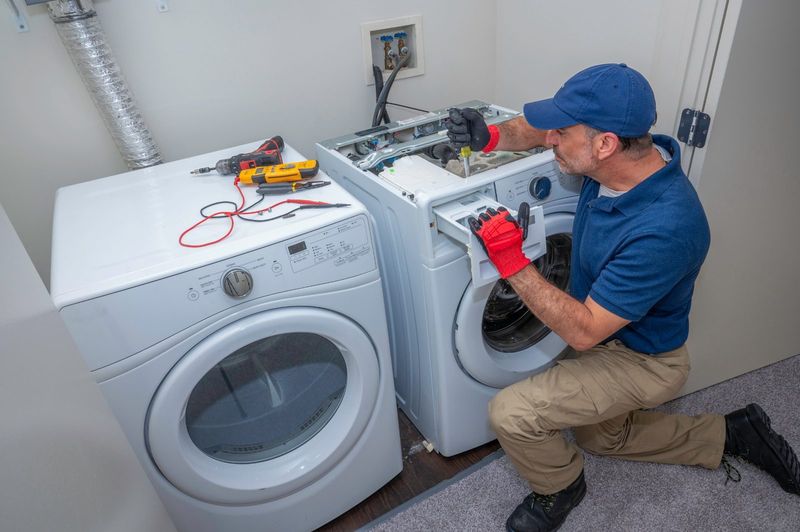
The real challenge begins when the source of the problem isn’t immediately obvious.
For example, two refrigerators may stop cooling for entirely different reasons. One could have a failed compressor start relay, while another might have a refrigerant leak or a defective control board. Although the symptoms appear similar, the correct repair is completely different.
This is where an expert appliance repair service provides value.
Instead of replacing components one by one until something works, experienced technicians follow a structured diagnostic process that identifies the root cause before any repairs begin.
Accurate diagnosis reduces unnecessary expenses, prevents repeat failures, and often shortens repair time by fixing the correct problem on the first visit.
Diagnosis Is More Important Than Guesswork
Professional appliance repair begins with testing, not assumptions.
Experienced technicians rarely replace parts based solely on symptoms because many appliance failures produce nearly identical warning signs.
For example:
- A refrigerator that won’t cool could have compressor, relay, thermostat, or control board issues.
- A washer that won’t spin may have a faulty lid switch, drive belt, motor, or electronic control.
- A dryer producing no heat might have a blown thermal fuse, failed heating element, thermostat, or wiring issue.
An expert appliance repair service follows a systematic diagnostic sequence rather than immediately installing replacement parts.
A typical diagnostic process includes:
- Verifying electrical power.
- Reviewing manufacturer error codes.
- Testing components individually.
- Measuring voltage and continuity.
- Confirming the failed component.
- Performing the repair only after identifying the actual fault.
This disciplined approach improves repair accuracy while reducing unnecessary part replacement.
Professional Testing Equipment Makes a Difference
Proper diagnosis depends on more than experience alone.
Professional technicians use specialized testing equipment that allows them to verify electrical and mechanical performance before replacing components.
Digital multimeters
A digital multimeter measures:
- Voltage
- Resistance
- Continuity
- Current flow
These measurements help determine whether electrical components are operating correctly or have actually failed.
Without proper testing, technicians risk replacing perfectly functional parts while overlooking the real problem.
Clamp meters and amperage testing
Many appliance failures involve motors or compressors.
Measuring current draw allows technicians to identify failing motors, overloaded compressors, and electrical faults that cannot be detected through visual inspection alone.
This additional level of testing is one reason an expert appliance repair service can often diagnose complex problems much more accurately than someone relying solely on observation.
Understanding Manufacturer Error Codes
Modern household appliances contain sophisticated electronic control systems.
Brands such as Samsung, LG, Whirlpool, Bosch, GE, and KitchenAid frequently display diagnostic error codes that indicate where the fault has occurred.
Experienced technicians understand these codes and use them as part of the overall diagnostic process.
Rather than replacing parts based on guesswork, they combine:
- Error code interpretation
- Electrical testing
- Mechanical inspection
- Manufacturer service documentation
This process reduces diagnostic time and improves first-visit repair success.
Brand-Specific Training Matters
Today’s appliances vary significantly between manufacturers.
Even appliances performing similar functions often use different electronic controls, motors, sensors, software, and mechanical designs.
An expert appliance repair service invests time in learning these differences.
Many technicians receive manufacturer-specific training covering:
- Refrigeration systems
- Smart appliances
- Induction cooktops
- Front-load washers
- High-efficiency dryers
- Electronic control boards
- Wi-Fi-enabled appliances
Because they understand how each manufacturer designs its products, trained technicians can often identify failures much faster than someone working across unrelated home repair trades.
Certifications Demonstrate Professional Expertise
Technical knowledge is important, but certain appliance repairs also require formal certification.
Professional credentials demonstrate that technicians have completed specialized training and understand applicable safety standards.
EPA Section 608 certification
Servicing sealed refrigeration systems requires technicians to handle refrigerants responsibly.
In the United States, repairs involving refrigerant recovery or sealed cooling systems require EPA Section 608 certification.
Without this certification, technicians cannot legally service refrigerant lines or recharge cooling systems.
Gas appliance qualifications
Gas-powered appliances require additional safety knowledge.
Repairs involving:
- Gas dryers
- Gas ovens
- Gas cooktops
- Gas ranges
must be performed carefully to ensure proper combustion, leak prevention, and safe operation.
An expert appliance repair service understands applicable safety procedures and performs testing before returning the appliance to service.
Where General Handymen Usually Fall Short
General handymen often possess valuable repair skills for basic household maintenance.
However, modern appliances combine mechanical systems, electronics, software, refrigeration technology, gas systems, and electrical controls that require specialized knowledge.
A handyman may successfully replace:
- Door handles
- Hinges
- Simple switches
- Basic mechanical parts
More complicated failures often require:
- Electrical diagnostics
- Refrigeration system knowledge
- Gas safety testing
- Electronic control board troubleshooting
- Manufacturer service procedures
Attempting complex appliance repairs without proper training can increase repair costs by replacing unnecessary parts or overlooking the actual cause of the failure.
First-Visit Repair Success
One characteristic that separates an expert appliance repair service from less experienced providers is a higher likelihood of completing repairs during the initial appointment.
Several factors contribute to first-visit success:
- Accurate diagnosis
- Well-stocked service vehicles
- Familiarity with common appliance brands
- Access to manufacturer service information
- Experience identifying recurring failures
Although not every repair can be completed immediately, experienced technicians often arrive prepared with commonly needed replacement parts, reducing delays and additional service visits.
How to Verify Expertise Before Scheduling Service
Marketing claims alone don’t prove expertise.
Before booking an expert appliance repair service, ask questions that reveal how the company actually approaches repairs.
Helpful questions include:
- Which appliance brands do you service most often?
- Do your technicians perform electrical testing before replacing parts?
- Are your technicians certified for sealed refrigeration systems?
- Do you service both gas and electric appliances?
- Are written estimates provided before repairs begin?
- What warranty covers parts and labor?
- Do technicians carry commonly used replacement parts?
Confident, detailed answers generally indicate a higher level of technical experience than vague promises or advertising slogans.
Why Expertise Saves Money Over Time
Some homeowners focus primarily on finding the lowest repair price.
However, accurate diagnosis often saves significantly more money than choosing the cheapest service call.
An expert appliance repair service reduces costs by:
- Identifying the actual failed component.
- Avoiding unnecessary part replacement.
- Preventing repeat service visits.
- Extending appliance lifespan.
- Completing repairs more efficiently.
A correctly repaired appliance is less likely to experience recurring issues, making professional expertise a worthwhile investment for both common household appliances and premium brands.
Frequently Asked Questions
What is expert appliance repair service?
An expert appliance repair service involves diagnosing and repairing household appliances using trained technicians, professional testing equipment, manufacturer-approved procedures, and structured diagnostic methods rather than trial-and-error repairs.
How does expert appliance repair work?
The technician inspects the appliance, performs electrical and mechanical testing, reviews manufacturer error codes, confirms the failed component, provides a written estimate, and completes the repair using appropriate replacement parts.
What is the difference between expert repair and handyman repair?
An expert appliance repair service uses specialized diagnostic equipment, manufacturer knowledge, and required certifications for complex electrical, gas, and refrigeration repairs. A handyman generally handles simpler mechanical repairs and may not possess the training or certifications necessary for advanced appliance systems.
Who needs expert appliance repair service?
Homeowners, landlords, and property managers experiencing electrical faults, refrigeration problems, gas appliance issues, recurring breakdowns, or complex electronic failures should consider hiring an expert appliance repair service rather than relying on general household repair services.
How do I choose an expert appliance repair provider?
Choose an expert appliance repair service that employs trained technicians, services your appliance brand regularly, follows structured diagnostic procedures, provides written estimates, offers warranties covering both parts and labor, and carries appropriate certifications for sealed refrigeration systems or gas appliance repairs when required.